
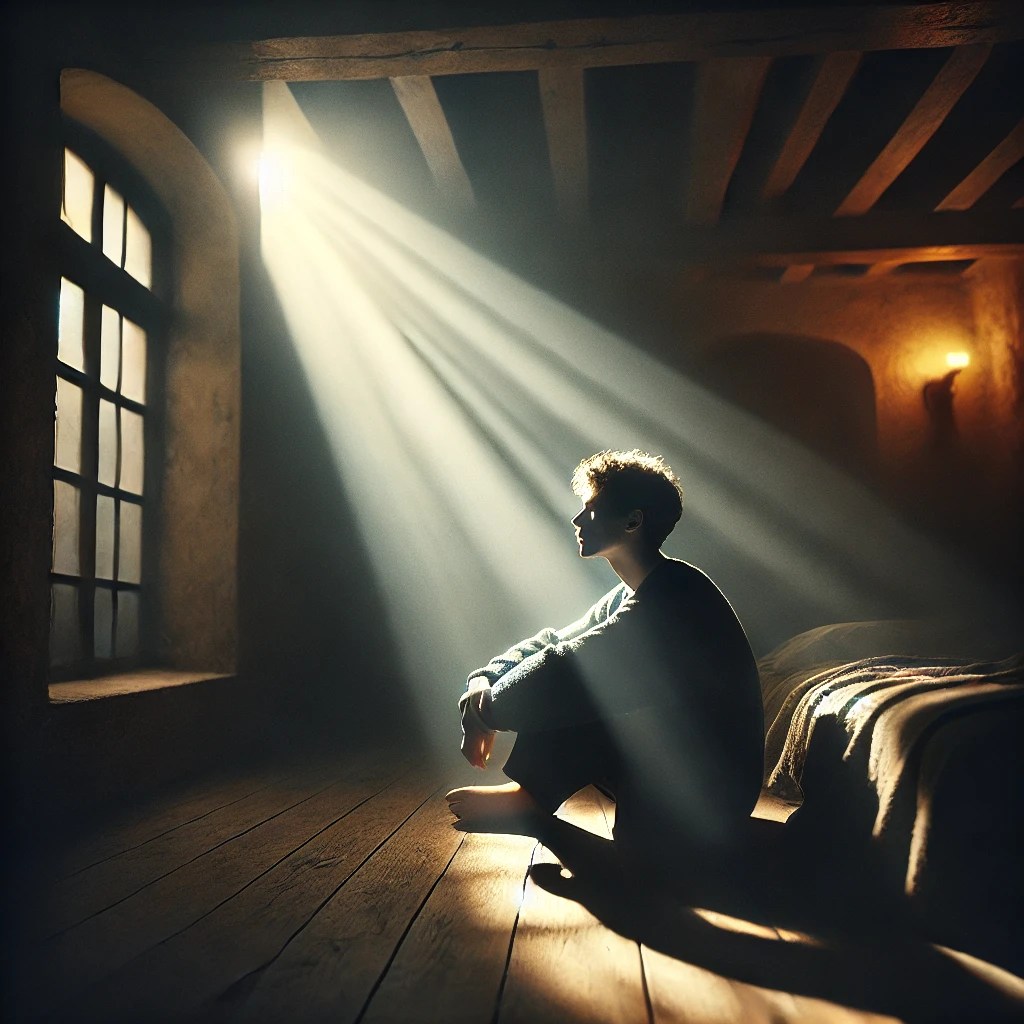
There’s something about darkness that unsettles us. It wraps itself around moments we don’t want to face—the moments we’d rather smooth over with light. And yet, the shadows sit there, waiting. Not as monsters, not as punishments, but as quiet companions asking us to look closer.
I used to think darkness was the enemy—that feeling lost, unsure, or broken meant I was failing somehow. I thought I wasn’t supposed to feel it, that the sadness, anger, or frustration made me less of a “light being.” Like allowing myself to feel those things meant I’d be punished or—worse—kicked out of some kind of “light club” for not being positive enough. So, I buried it deeper and deeper, trying to fit into a mold I didn’t understand, afraid of being seen as not enough.
Maybe you’ve felt that too—like you’re doing it wrong, like feeling anything other than light and love means you’ve failed. But it doesn’t. Darkness isn’t here to break us; it’s here to teach us. And if we let it, it shows us parts of ourselves we would never find in the light.
What Are Shadows, Really?
They’re the parts we hide. The thoughts we don’t say out loud. The doubts, the anger, the sadness we’re told to sweep under the rug because “everything’s fine.”
But everything isn’t always fine, is it? Sometimes we’re angry. Sometimes we’re afraid. Sometimes we’re just sad. And that’s okay.
The shadows aren’t a sign that something is wrong with you. They’re just signals—like little flags waving, saying “Hey, look here. There’s something you need to see.”
- Your sadness might be asking you to stop pretending everything’s okay.
- Your anger might be telling you where your boundaries are being crossed.
- Your doubt might be nudging you to ask the questions you’ve been avoiding.
The Lessons Darkness Brings
Stillness Can Be a Gift
Darkness forces you to stop. At first, that feels unbearable—like you’re stuck in a room with no windows, no way out, and nothing to hold onto. It’s scary how loud the quiet becomes, like a hum you can’t escape, filling every corner of your mind, isn’t it? Suddenly, you’re left with just yourself—your thoughts, your feelings, your fears. It’s isolating, and maybe it feels unfair, like you’ve been abandoned by the light, left to figure everything out alone, even when you don’t know where to start.
I’ve been there many times—feeling so mad at life, the universe, or whoever happened to be in front of me. I wanted to “abandon the light” altogether because, in those moments, it felt like it had turned its back on me first, so why not do just the same… Sometimes my brain thinks it knows better and decides to play smart, like it’s got life all figured out and the light isn’t worth the effort. I was stubborn—so stubborn—and honestly, I still am sometimes. The only difference now is that the madness doesn’t last as long; it softens, just a little, when I remember what the darkness is trying to show me.
And here’s the thing: the light never actually leaves us. It’s in our DNA—woven into who we are. No matter how far we drift, the light is still there, is never gone. It’s part of you—it’s been in you all along, waiting for you to see it.
Sometimes, it takes sitting with the darkness to remember the light has been there all along. It’s only when you stop searching outside yourself that you start to notice things—the quiet thoughts you’ve ignored, the feelings you’ve been pushing away, the small voice that’s been whispering “I need you to listen.”
It’s uncomfortable, yes. And I’ll be honest—I don’t always manage to shut it down. My mind is like a circus of little gnomes talking constantly, running around with their tiny, relentless voices. They chatter over each other, throwing ideas, worries, and random thoughts like confetti. They don’t listen when I ask for quiet—and maybe yours don’t either. But clarity doesn’t mean silence. It’s not about making the noise disappear. It’s what happens in the space between the chaos—when you stop trying to quiet it and just let yourself notice what’s already there, underneath it all.
Shadows Hold Wisdom
What if the emotions we fear the most aren’t there to hurt us but to teach us?
- Grief shows us what we love deeply. It’s like waves in the ocean—sometimes gentle, sometimes overwhelming, but always carrying us back to what matters most. It reminds us of the depth of our love and the parts of life we hold closest, even when it hurts.
- Anger reminds us of our worth. It shows up when something within us feels devalued or dismissed—a boundary crossed, a voice unheard, a need unmet. Anger isn’t the villain; it’s the messenger. It points to where we’ve been shrinking ourselves or letting others shrink us, nudging us to stand taller, speak louder, and reclaim the spaces where we’ve been quiet for too long.
- Fear points to where we’re ready to grow. It’s that edge we hesitate to cross, the thing we avoid because it feels too big or too uncertain. But fear often shows us the very path we’re meant to take—like a doorway to a part of ourselves we haven’t met yet. It’s not about being fearless; it’s about stepping forward even when fear is walking beside us.
- Denial protects us when we aren’t ready yet. It’s like a pause button—holding us in place until we’re strong enough to face what’s waiting. It teaches us patience and shows us where our deepest fears live, quietly pointing us to what we’re avoiding.
- Guilt reminds us where we need to make amends. It’s a signal that we’ve acted in a way that doesn’t align with who we want to be. Instead of punishing ourselves, we can see guilt as an opportunity to take responsibility and grow.
- Shame whispers the lie that we are not enough, but it also reveals where we need compassion the most. When we bring shame into the light—through honesty and kindness—it loses its grip on us and reminds us of our inherent worth.
- Regret can feel like a weight we carry, but it shows us what matters. It’s not about dwelling on the past; it’s about learning from it. Regret becomes a signpost, showing us where we want to choose differently next time.
When we stop running from these feelings and ask, “What are you trying to tell me?”, we often find answers we didn’t know we needed.
Walking with Shadows
Darkness isn’t a mistake. It’s part of the journey. You don’t need to rush through it. You don’t need to fix it. Here’s what you can do:
- Pause. Breathe. Let yourself be still.
- Ask questions. What am I feeling? What is this teaching me?
- Trust. Darkness doesn’t last forever. You are growing in ways you can’t yet see.
Be gentle with yourself as you walk. Growth doesn’t happen all at once, and shadows don’t disappear overnight. Don’t diminish what you’re feeling. Acknowledge it, love yourself, and trust yourself. Trust your shadows too—they are not against you. They are showing you something you need. And no matter how it feels right now, remember this: you are exactly who you need to be, where you need to be. You are whole, and you are enough.
Reflections for the Road
Your shadows don’t mean that you’re broken. They are proof that you’re human. I remind myself of this often, especially on the days when the shadows feel heavier than the light. They are invitations to look deeper, to listen closer, to grow stronger. So if you feel lost, hold onto this: the darkness isn’t your enemy. It might just be where you need to be—to find the light you didn’t know you had. Keep walking, even if it’s slow. The light will meet you where you are.
 Fragments of the Divine
Leave a comment